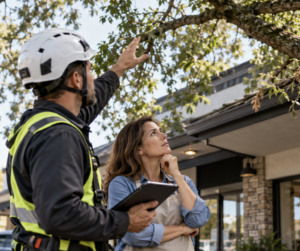
Retail business owners spend considerable time protecting their inventory, managing employees, improving customer experiences, and keeping operating expenses under control. Yet one potentially expensive threat often receives little attention until something goes wrong. It stands outside the building, grows larger every year, and can create serious financial consequences without warning.
Trees surrounding retail stores, shopping centers, restaurants, and commercial properties can become liabilities when they are neglected. Overgrown branches, weakened trunks, damaged roots, and poorly maintained landscaping may threaten customers, vehicles, buildings, and daily business operations.
🌳 A single falling limb can damage parked cars, block a storefront entrance, or force a business to temporarily close. In more serious circumstances, property owners may face injury claims, emergency cleanup expenses, and costly repairs.
For retailers operating on tight margins, these unexpected expenses can disrupt an otherwise profitable business. Tree specialists emphasize that preventive inspections and responsible maintenance can help property owners identify potential hazards before they turn into expensive emergencies.
The issue deserves greater attention throughout the retail industry because protecting a business involves more than what happens inside its doors.
Why Retail Property Maintenance Is Becoming a Bigger Business Concern
The modern retail environment demands careful attention to operating costs, customer safety, and property conditions. Whether managing a neighborhood boutique or a large shopping plaza, business owners must consider how the surrounding property affects both their financial stability and their customers’ experiences.
The National Retail Federation has emphasized the importance of protecting retail employees and customers. Although much of the industry’s safety discussion focuses on security and incidents inside stores, exterior property hazards also deserve attention.
A retail property can appear attractive while concealing serious problems among its trees. A mature tree may have internal decay, weakened branches, or root damage that is not immediately apparent to someone without appropriate training.
Property owners frequently notice obvious maintenance issues such as damaged signage, broken pavement, or malfunctioning lighting. Trees, however, may receive attention only when branches begin interfering with buildings or severe weather approaches.
This reactive approach can prove expensive. Emergency tree removal, structural repairs, and business interruptions may cost considerably more than planned maintenance, depending on the severity of the damage.
Commercial property management increasingly requires looking beyond routine landscaping to evaluate whether the entire outdoor environment supports safe, reliable retail operations.
The Overlooked Financial Consequences of Dangerous Trees
One of the most significant misconceptions about commercial tree maintenance is that postponing it always saves money.
Consider a large branch extending over a retail parking lot. Removing or appropriately pruning a hazardous limb during a scheduled maintenance visit may be relatively straightforward. If the branch falls during a storm and damages several vehicles, the financial consequences become considerably more complicated.
The business may face cleanup costs, property repairs, insurance deductibles, disputed liability claims, and potential customer dissatisfaction. Depending on the circumstances, the incident could also interfere with deliveries or temporarily restrict access to the store.
The U.S. Small Business Administration recognizes disaster preparedness as an important part of business resilience. Its guidance encourages owners to assess vulnerabilities and prepare for events that could disrupt operations.
Tree-related damage represents one of those vulnerabilities, particularly in regions exposed to hurricanes, thunderstorms, high winds, or heavy snowfall.
💰 Even when insurance covers part of the physical damage, a business may still experience financial losses from interrupted operations, uncovered expenses, or increased administrative demands. Coverage depends on the policy and the specific circumstances.
A damaged tree can also affect neighboring businesses in a shopping center. If a fallen trunk blocks a shared driveway or damages utility equipment, several tenants may experience disruption at once.
Identifying tree hazards before an incident occurs is therefore not simply a landscaping decision. It can be part of a broader financial risk-management strategy.
How Tree Problems Can Affect Retail Customer Safety
Customers rarely examine the condition of trees before entering a shopping center. They expect parking areas, sidewalks, storefronts, and pedestrian routes to be reasonably safe.
Unfortunately, neglected trees can create hazards that are easy to overlook.
Low-hanging branches may interfere with pedestrian walkways. Large roots can contribute to uneven pavement. Dead limbs may fall unexpectedly, while excessive growth can obstruct lighting, signage, or visibility near parking lot entrances.
The Occupational Safety and Health Administration establishes general requirements for maintaining workplace walking surfaces in safe condition. These requirements reinforce the importance of identifying and addressing hazards in areas used by employees.
Property owners and managers should also consider their responsibilities under applicable premises-liability laws, local ordinances, and lease agreements.
Not every damaged branch or exposed root creates an immediate emergency. Nevertheless, conditions that threaten customer access or safety deserve professional attention rather than speculation.
The business consequences can extend beyond the physical incident itself. Customers who encounter damaged vehicles, blocked sidewalks, or visibly neglected landscaping may associate those conditions with poor property management.
In an industry where convenience and first impressions influence shopping decisions, maintaining a safe exterior environment helps support customer confidence.
The Warning Signs Tree Specialists Look for Around Commercial Properties
Trees can experience structural problems long before they fall. Recognizing potential warning signs allows commercial property owners to arrange professional evaluations before conditions deteriorate.
A tree specialist may examine the trunk, branches, root system, surrounding soil, and nearby structures to determine whether further investigation or corrective work is necessary.
Visible concerns can include dead branches, significant cracks, fungal growth near the base, cavities, damaged roots, or unusual changes in the tree’s position. A sudden lean or newly lifted soil around the root plate deserves particular attention.
However, appearance alone does not establish whether a tree is dangerous. Some defects are manageable, while others require closer evaluation by a qualified professional.
The Occupational Safety and Health Administration’s guidance on tree care operations discusses the serious hazards associated with falling trees, branches, and other objects during tree work. It also highlights the importance of assessing tree conditions and work sites before operations begin.
For retail properties, this reinforces the need to use trained personnel rather than asking general maintenance employees to perform dangerous tree work without appropriate qualifications and equipment.
🌿 A professional inspection can help distinguish between routine pruning needs, structural concerns requiring monitoring, and situations that may call for removal.
The objective should be preserving healthy trees whenever reasonably possible while addressing conditions that pose unacceptable risks.
Why Storm Season Makes Retail Tree Maintenance Even More Important
Severe weather can transform a manageable tree problem into an immediate business emergency.
Strong winds may break weakened branches, uproot trees, or cause debris to strike roofs, storefront windows, outdoor equipment, and parked vehicles. Saturated soil can also reduce root stability under certain conditions.
Retailers in hurricane-prone regions face particular challenges because property damage may coincide with power outages, supply interruptions, and reduced customer access.
According to SCORE’s Disaster Preparedness for Retail Stores guide, retailers benefit from planning ahead for emergencies that threaten their premises, employees, and continued operations.
Tree maintenance should be considered alongside other preparations such as inspecting roofs, securing outdoor equipment, reviewing emergency procedures, and maintaining current insurance records.
An inspection before a region’s typical severe-weather season may reveal deadwood, damaged limbs, or structural concerns that warrant attention.
Timing matters. Once a major storm is approaching, tree service providers may face heavy demand, and dangerous weather conditions can make outdoor work inappropriate.
Property owners should not attempt hazardous pruning or removal during an approaching storm. Qualified professionals should determine what work can be performed safely.
After severe weather, trees should also be evaluated before employees or customers enter areas where unstable branches or damaged trunks may present a hazard.
Retail Curb Appeal Has a Financial Side That Goes Beyond Appearance
Trees are not merely potential liabilities. When properly selected and maintained, they can contribute significantly to the appearance and usability of a commercial property.
Healthy trees provide shade, soften large paved areas, and help create a more welcoming setting for shoppers. Attractive landscaping can distinguish a retail center from neighboring commercial developments and complement investments in storefront improvements.
The broader concept of retail has evolved from traditional marketplaces into an extensive network of shopping centers, specialty stores, and modern commercial environments. Across these settings, the physical shopping environment remains an important part of how customers experience a business.
An inviting exterior can help establish a positive first impression before anyone enters the building.
However, appearance should not come at the expense of safety or accessibility. Trees planted too close to structures, allowed to overgrow signage, or improperly maintained can eventually undermine the benefits they were intended to provide.
Professional tree care helps retail property owners balance attractive landscaping with practical concerns such as clearance, root growth, pedestrian access, and long-term maintenance.
For shopping centers with multiple tenants, coordinated tree management can also promote a consistent appearance across the property.
Rather than viewing landscaping as an occasional expense, owners can treat it as part of protecting and maintaining the overall commercial environment.
How a Tree Specialist Can Help Retailers Avoid Unexpected Expenses
A tree specialist’s role extends beyond removing trees after a storm.
Experienced professionals can examine tree health, identify structural concerns, recommend appropriate pruning, and help property managers establish priorities based on observed conditions.
For retail owners who are uncertain where to begin, researching a qualified Tree Specialist Near Me can provide a starting point for exploring professional tree assessment and maintenance services.
The value of an inspection lies partly in understanding which conditions warrant immediate action and which can be addressed through scheduled maintenance.
For example, a healthy mature tree may need selective pruning to improve clearance around a building or walkway. Another tree showing significant structural deterioration may require a more detailed risk assessment.
Professional recommendations should account for the species, condition, location, and potential consequences of failure. A qualified arborist with relevant tree-risk assessment experience may be particularly valuable for complex commercial sites.
Retail property owners should seek providers with appropriate qualifications, insurance, experience, and knowledge of local requirements. Commercial tree work often involves specialized equipment and careful coordination to protect pedestrians, vehicles, and surrounding buildings.
The goal is not to remove every large tree near a store. It is to make informed decisions that support safety while preserving the benefits of healthy trees.
The Hidden Cost of Closing a Retail Store After Property Damage
When a tree damages a retail building, the repair bill may be only one part of the financial impact.
A business could lose revenue while repairs are completed, employees may experience schedule disruptions, and customers may temporarily shift their purchases to competitors.
For retailers that depend on seasonal traffic, even a short interruption during a peak shopping period can have consequences.
A gift shop experiencing a closure during the holiday season, for example, may have limited opportunities to recover those lost sales. Similarly, a restaurant or convenience store relying on frequent local customers may face challenges if access to its property is restricted.
The U.S. government’s disaster assistance guidance explains that certain qualifying businesses affected by declared disasters may be eligible for SBA assistance, including programs addressing physical damage or economic injury.
Such assistance is not a substitute for preventive maintenance, and eligibility is limited by program requirements and disaster circumstances.
Retail owners can reduce uncertainty by reviewing property insurance, documenting maintenance activities, and developing procedures for responding to damaged trees and other exterior hazards.
A well-maintained record of inspections and corrective work can also help property managers demonstrate what actions were taken, although it does not automatically determine legal responsibility or insurance coverage.
Why Retail Business Owners Should Rethink Their Maintenance Budgets
Retail budgets often prioritize expenses with immediate, measurable results. Advertising generates customer interest, merchandise fills shelves, and staffing keeps operations running.
Tree maintenance may not produce an obvious increase in sales the following day, which makes it tempting to postpone.
Yet overlooking long-term property risks can create significant financial exposure.
A practical maintenance approach considers the age and condition of existing trees, the number of people using the property, the location of parking and pedestrian areas, and the region’s weather patterns.
A heavily trafficked shopping center may require different inspection priorities than a small standalone store surrounded by open space. Properties with older trees or a history of storm damage may also need additional attention.
Routine monitoring, appropriate professional inspections, and prompt responses to identified hazards can help owners allocate resources more effectively.
This approach does not guarantee that a tree will never fail. Even apparently healthy trees can suffer damage during severe weather. It does, however, help reduce avoidable uncertainty and provides a stronger basis for maintenance decisions.
Retailers who treat outdoor property conditions as part of their operational planning are better positioned to identify problems before an emergency disrupts their business.
The Bigger Retail News Story: Property Protection Is Part of Business Protection
Much of today’s retail news focuses on changing consumer behavior, rising operating expenses, technology, security, and competition.
Those issues are important, but the condition of the physical property remains fundamental to successful brick-and-mortar retail.
A retailer can invest substantially in marketing, employee training, and store improvements while still being vulnerable to preventable problems outside the entrance.
The business implications become particularly clear when a damaged tree affects parking access, storefront visibility, deliveries, or customer safety.
Retail owners who lease their locations should also understand how exterior maintenance responsibilities are divided. Some commercial leases place landscaping obligations on property owners, while others assign certain duties or expenses to tenants.
Clarifying these responsibilities before an incident can help prevent confusion when urgent maintenance becomes necessary.
For commercial landlords, proactive tree management may also contribute to tenant satisfaction by supporting safer, more accessible premises.
The larger lesson is that property maintenance belongs in conversations about retail resilience, not merely landscaping aesthetics.
🏬 A successful retail environment depends on numerous details working together. Healthy, appropriately maintained trees can be an asset, while neglected or structurally compromised trees can become an unexpected source of expense.
Conclusion: The Most Expensive Retail Problems May Be Hiding Outside
Retail business owners face enough financial uncertainty without overlooking hazards that may be developing just beyond their storefronts.
Trees contribute shade, beauty, and character to commercial properties, but they also require responsible oversight. Damaged branches, unstable trees, and poorly managed roots can create safety concerns, costly property damage, and interruptions to normal business activity.
The financial impact of a tree-related incident depends on its circumstances, but the potential consequences make professional evaluation and preventive maintenance worth considering.
Rather than waiting until a storm exposes a serious problem, retail property owners can take a more deliberate approach to inspecting and maintaining their outdoor spaces.
That includes recognizing warning signs, seeking qualified professional advice, planning for severe weather, and treating tree care as part of overall commercial property management.
For retailers focused on protecting profits, employees, customers, and long-term business value, the message is straightforward: the next expensive maintenance problem might not be inside the store at all.
It may already be growing outside. 🌳