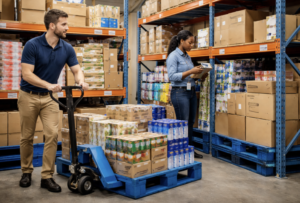
Retail stores run on more than merchandising, pricing, and customer service. Behind every clean aisle, stocked shelf, and timely restock is a backroom operation that has to stay organized, efficient, and ready to move. When inventory piles up, product gets misplaced, staff waste time searching, and replenishment slows down, the entire store feels it. That is why physical storage decisions matter far more than many retailers realize.
One of the smartest ways to improve backroom performance is by using the right pallet system. Retail inventory is constantly moving. Seasonal displays arrive in waves. Promotions create surges in demand. Returns need sorting. Overstock needs a place to sit without creating confusion. A strong, practical storage base helps hold that flow together. For many stores, Mid-Duty Pallets offer the ideal balance between strength, flexibility, and space efficiency.
Retailers are also under increasing pressure to improve inventory visibility and store-level execution. The National Retail Federation has highlighted inventory management, predictive analytics, and supply chain investment as major retail priorities for 2026, while the U.S. Census Bureau continues to track retail inventories as a key economic indicator. In other words, inventory flow is not a side issue. It is now a core retail performance issue.
📦 Better Backroom Storage Starts with Better Foundations
A retail backroom is rarely static. Products come in, get staged, are pulled for the floor, moved for promotions, counted for audits, and set aside for transfer or return. If the storage platform under that product is weak, inconsistent, oversized, or poorly matched to the job, the entire system becomes harder to manage.
That is where mid-duty pallet solutions make practical sense. Retail stores do not always need the heaviest industrial pallet on the market, but they still need dependable support for boxed merchandise, packaged goods, fixtures, seasonal inventory, and mixed loads. A mid-duty option can create a more organized storage footprint without adding unnecessary bulk or cost. It helps retailers keep product elevated, grouped, and easier to handle in tighter backroom environments.
This matters because inventory management is fundamentally about controlling stock levels, product placement, and movement through a business. Even a broad source like Wikipedia’s overview of inventory management reflects the same basic truth: inventory only performs well when businesses can understand what they have, where it is, and how it moves. In retail, pallets directly affect that visibility by shaping how inventory is stored and retrieved.
🏬 Retail Inventory Flow Depends on Speed and Order
Inventory flow is not just about storing product. It is about moving product efficiently from receiving to backroom to sales floor. When that flow is disrupted, stores lose time and money in ways that are easy to underestimate. Associates spend longer handling freight. Replenishment takes more steps. Overstock becomes harder to rotate. Damage risk rises when products are stacked poorly or stored in unstable ways.
A smarter pallet setup improves this flow by creating cleaner staging areas and more predictable storage zones. When merchandise sits on reliable pallets, it can be grouped by category, vendor, season, or floor priority. That makes it easier to spot what needs immediate replenishment and what can remain in reserve. Instead of creating clutter, the backroom becomes a working system.
That focus on real-time inventory visibility is becoming more important across retail. NRF experts have pointed to technology, supply chain discipline, and operational readiness as central issues for retailers in 2026, especially as stores work to rebalance inventory and respond faster to demand shifts. A retail store cannot fully benefit from digital inventory tools if its physical backroom setup is still disorganized. The digital side and the physical side have to work together.
🚚 Mid-Duty Pallets Help Retailers Use Space More Intelligently
Backroom space is expensive. Retailers do not have unlimited square footage, especially in urban stores, grocery environments, specialty retail, apparel locations, and high-turnover general merchandise spaces. Every storage decision affects how much inventory the store can safely hold and how easily staff can access it.
Mid-duty pallets support smarter use of that space because they are well suited for everyday retail loads without forcing the store to overbuild its storage system. In many stores, the goal is not maximum industrial capacity. The goal is practical organization. Retailers need pallets that can support product securely while fitting the rhythm of store operations.
That becomes even more valuable when retail inventories shift with the season. Census inventory reporting shows that retail inventory remains an important operating and economic measure, and recent federal data continues to underscore the role inventory plays in retail planning. At the broader business level, the inventories-to-sales ratio is watched closely because it reflects how efficiently goods are being carried relative to demand. Retail stores that manage inventory flow better at the store level put themselves in a stronger operational position.
🛒 Cleaner Storage Supports Better Merchandising on the Sales Floor
Customers never see most of the backroom, but they absolutely feel its effects. Empty shelves, delayed replenishment, messy promotional rollouts, and missing sizes or variants often trace back to poor inventory handling behind the scenes. The store floor performs better when the backroom is structured for speed.
That means the pallet decision is not just a warehouse decision. It is a merchandising decision. It affects how fast new product hits the floor, how quickly fast sellers are replenished, and how cleanly promotional inventory can be staged before launch. For retail leaders focused on execution, that is a serious advantage.
GS1 US, which works extensively on standards and inventory visibility in retail environments, emphasizes end-to-end item-level visibility, data accuracy, and optimized fulfillment as priorities in apparel and general merchandise. Those goals are easier to achieve when inventory is physically staged in a consistent, manageable way. Stronger pallet discipline helps make the data more actionable because the product is actually where the system says it should be.
📉 Reduced Product Damage and Less Operational Waste
Retail stores deal with a surprising amount of avoidable inventory loss. It may not always show up as dramatic damage. Sometimes it is crushed packaging, unstable stacking, moisture exposure, poor product rotation, or staff moving freight multiple times because storage was set up inefficiently. Over time, those small losses add up.
Mid-duty pallets help reduce that waste by giving retail inventory a more stable home. Merchandise that is properly staged is easier to protect, easier to move, and easier to count. Associates can work faster without improvising unsafe storage methods. Managers can see what is in reserve more clearly. The backroom becomes less reactive and more deliberate.
That discipline matters at a time when many retailers are staying careful about margins, inventory exposure, and operating costs. Recent retail reporting from Reuters and the Associated Press has pointed to cautious consumer spending, inventory sensitivity, and continued retailer investment in store operations. When margins are under pressure, waste reduction becomes even more important. Better storage decisions are one of the most practical ways to support that goal.
🔄 A Stronger Backroom Makes Omnichannel Retail Easier
Modern retail stores are not just stores anymore. They are mini fulfillment centers, pickup points, return hubs, and transfer locations. Inventory may be needed for in-store shoppers, buy-online-pickup-in-store orders, same-day service, or internal redistribution. That puts even more stress on the backroom.
When backroom storage is sloppy, omnichannel execution gets harder. Orders take longer to pick. Returned goods pile up. Associates lose time locating inventory that should have been easy to access. The more tasks a store handles, the more important physical organization becomes.
Mid-duty pallets can support that complexity without overcomplicating the setup. They allow stores to create defined reserve areas, return zones, overflow sections, and replenishment staging locations that remain manageable through daily traffic. Instead of constantly shifting goods around to make room, stores can create a steadier operating rhythm.
That aligns with broader retail movement toward smarter, more responsive operations. Retail leaders are increasingly investing in systems that help them automate, forecast, and rebalance inventory more effectively. But the backroom still has to physically support those strategies. Without solid storage, even the best forecasting system will hit friction on the ground.
🧠 Smarter Stores Think Beyond Shelves
A lot of retailers invest heavily in front-end customer experience while underestimating what is happening in the back. Yet the most efficient stores usually understand that sales floor performance starts with operational discipline behind the scenes. Store teams do better when product is easier to receive, stage, count, rotate, and replenish.
Using the right pallet system is part of that discipline. It creates structure. It improves handling. It supports cleaner inventory zones. It helps reduce wasted labor. It gives stores a more dependable base for everyday movement. In a retail environment where speed and accuracy matter, those gains are not small.
For store owners, operators, and retail managers, this is the kind of investment that supports both immediate workflow and long-term scalability. A better pallet setup does not just solve a storage problem. It helps create a store that runs with less friction.
Conclusion
Retail success depends on what customers see, but it is sustained by what happens behind the scenes. Smarter backroom storage improves replenishment, protects inventory, supports omnichannel demands, and helps store teams work faster with less confusion. That is exactly why mid-duty pallet solutions deserve more attention in retail operations.
When retail stores want a more organized, efficient, and dependable way to manage backroom inventory, the right pallet choice can make a meaningful difference. Mid-duty pallets offer the balance many retailers need: strong enough for everyday retail loads, practical enough for active backrooms, and flexible enough to support better inventory flow. In a business where inventory accuracy and speed matter more than ever, that is not a minor upgrade. It is a smarter operational move.